Nitrogen generators have become an essential tool in many industries, from food packaging and pharmaceuticals to electronics manufacturing and metal processing. These systems provide a reliable, cost-effective way to produce nitrogen on-site, reducing dependence on gas cylinders or bulk deliveries. Understanding nitrogen generators specs is crucial for selecting the right system that meets your operational needs while ensuring efficiency, safety, and sustainability.
Understanding Nitrogen Generators
Nitrogen generators are devices designed to extract nitrogen gas from compressed air. Unlike traditional methods that rely on liquid nitrogen tanks or high-pressure cylinders, these generators produce nitrogen continuously, offering a more consistent supply. The technology behind nitrogen generators often involves either membrane separation or pressure swing adsorption (PSA) methods. Each type has unique specifications, advantages, and operational requirements.
Membrane nitrogen generators use selective permeability to separate nitrogen from oxygen and other gases. Compressed air is passed through specialized membranes that allow oxygen and moisture to escape while retaining nitrogen. This method is ideal for applications requiring moderate nitrogen purity levels, typically between 95% and 99.5%. Membrane systems are compact, energy-efficient, and have minimal maintenance needs, making them a practical choice for small to medium-scale operations.
PSA nitrogen generators, on the other hand, are designed to produce higher purity nitrogen, often exceeding 99.999%. They operate using carbon molecular sieves to selectively adsorb oxygen under high pressure and then release it under low pressure. PSA systems are highly versatile and suitable for industries with stringent purity requirements, such as electronics, pharmaceuticals, and laboratory environments.
Key Specifications to Consider
When evaluating nitrogen generators specs, several technical parameters play a vital role in determining performance and suitability. Understanding these specifications helps businesses choose a system that aligns with their production requirements and operational constraints.
Nitrogen Purity
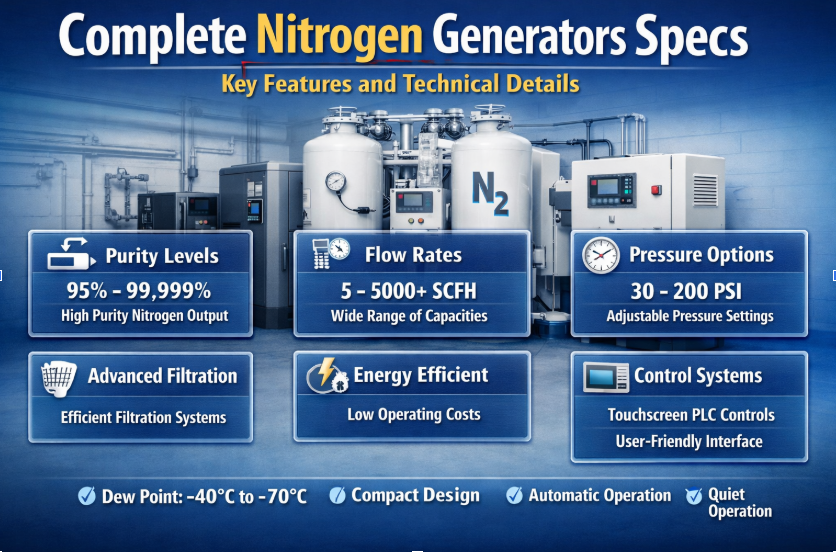
Nitrogen purity is one of the most critical specifications. Different applications require varying levels of nitrogen concentration. For example, food packaging may only need 95% purity, whereas chemical processing might demand 99.999% purity. Higher purity levels generally require PSA systems, while lower purity applications can benefit from membrane-based generators.
Flow Rate
The flow rate indicates the volume of nitrogen a generator can produce over a given period, usually measured in standard cubic feet per hour (SCFH) or liters per minute (LPM). Accurate calculation of nitrogen demand is essential to avoid undersizing or oversizing the generator. An undersized system can lead to production delays, while an oversized system can result in unnecessary capital expenditure and higher energy consumption.
Operating Pressure
Nitrogen generators operate under specific pressure ranges to optimize performance. Membrane systems typically require lower operating pressures, while PSA systems need higher pressures to ensure effective adsorption and desorption cycles. It is important to match the generator’s pressure capabilities with the requirements of your downstream equipment to maintain consistent performance.
Power Consumption
Energy efficiency is an increasingly important consideration for businesses aiming to reduce operational costs and environmental impact. Different nitrogen generators have varying power requirements depending on technology and capacity. Membrane systems tend to be more energy-efficient, while PSA units may require additional energy for compressors and valves. Understanding power consumption is key for evaluating total cost of ownership.
Footprint and Installation Requirements
Space constraints and installation conditions are often overlooked when selecting a nitrogen generator. Membrane systems are generally compact and easy to install, making them suitable for facilities with limited space. PSA units are larger and may require dedicated rooms or enclosures, along with proper ventilation and safety provisions. Reviewing installation specifications ensures seamless integration into existing operations.
Maintenance and Longevity
Routine maintenance ensures long-term reliability and consistent nitrogen quality. Maintenance needs vary depending on generator type and usage intensity. Membrane systems usually require minimal maintenance, primarily filter replacements. PSA generators require periodic inspection of molecular sieves, valves, and compressors. Evaluating maintenance requirements alongside nitrogen generators specs helps in planning operational budgets and minimizing downtime.
Applications and Benefits
Understanding nitrogen generators specs is not just a technical exercise; it also has practical implications for various industries. Different applications demand specific purity levels, flow rates, and operational pressures, making careful selection critical.
In the food and beverage industry, nitrogen is used to extend shelf life, prevent oxidation, and maintain product quality. Nitrogen generators provide a continuous supply of clean, dry gas, reducing dependency on external deliveries and ensuring consistent packaging processes.
In pharmaceuticals and laboratories, nitrogen is essential for creating inert atmospheres, preserving samples, and supporting chemical reactions. High-purity nitrogen from PSA generators ensures that sensitive products remain uncontaminated, while lower purity nitrogen from membranes may be used for general laboratory applications.
In the electronics and metal processing industries, nitrogen serves as a protective atmosphere during soldering, laser cutting, and heat treatment processes. A reliable nitrogen generator minimizes production disruptions, reduces costs associated with cylinder deliveries, and supports precise quality control.
Beyond operational benefits, on-site nitrogen generation promotes environmental sustainability. Eliminating the need for regular cylinder transport reduces carbon emissions, while generating nitrogen as needed minimizes waste and energy usage. Understanding nitrogen generators specs allows companies to balance performance, cost efficiency, and environmental responsibility effectively.
See also: The Impact of Social Media Technology
Tips for Choosing the Right Nitrogen Generator
Selecting the right nitrogen generator requires more than comparing price tags. A detailed assessment of nitrogen generators specs and operational needs ensures optimal performance and long-term value.
Start by calculating your actual nitrogen demand, considering both current and future production requirements. Consider the desired purity level, flow rate, and operating pressure to match the generator’s capabilities. Evaluate space availability, installation requirements, and local regulations that may affect equipment placement.
Next, consider the operational efficiency and energy consumption of different systems. While membrane generators may be more cost-effective for moderate purity applications, PSA systems offer higher purity and scalability. Maintenance requirements should also be factored in, as frequent or complex servicing can disrupt operations and increase costs.
Finally, consult with manufacturers or suppliers who can provide detailed nitrogen generators specs and performance data. Request case studies or references to understand how similar businesses have integrated nitrogen generators into their workflows. This ensures that your investment meets operational goals while minimizing risks and inefficiencies.
Maximizing Efficiency and Longevity
Once a nitrogen generator is installed, proper operation and routine maintenance are key to maximizing efficiency and lifespan. Regular filter replacements, leak checks, and monitoring of purity levels help maintain consistent performance. For PSA systems, scheduled inspection of molecular sieves and compressor components is essential. Monitoring operational parameters such as flow rate, pressure, and power usage ensures that the generator operates within designed specifications, reducing the risk of damage and downtime.
Integrating automated monitoring systems can further enhance reliability. Many modern generators offer digital control panels, remote monitoring, and alert systems to detect anomalies in performance. These features allow operators to address issues proactively, maintaining optimal nitrogen quality and reducing unexpected interruptions.
Advancing Your Industrial Processes with On-Site Nitrogen
Investing in a nitrogen generator is more than purchasing a piece of equipment; it is a strategic move to enhance operational efficiency, product quality, and sustainability. Understanding nitrogen generators specs empowers businesses to make informed decisions, optimize processes, and reduce long-term costs.
From high-purity PSA systems for pharmaceutical labs to membrane generators for food packaging, on-site nitrogen generation provides flexibility, reliability, and independence from external suppliers. By selecting the right generator, maintaining it properly, and monitoring performance, businesses can enjoy continuous nitrogen supply, improved operational efficiency, and measurable environmental benefits.
Choosing a system with well-documented specifications ensures that your investment is tailored to your operational needs. Evaluating key parameters such as purity, flow rate, operating pressure, energy efficiency, and maintenance requirements enables companies to match technology with application. This strategic approach maximizes productivity while reducing unnecessary expenditure.
Ultimately, nitrogen generators are a cornerstone of modern industrial processes. By understanding technical details, operational requirements, and the practical benefits of on-site nitrogen generation, businesses can create a reliable and cost-effective nitrogen supply tailored to their needs. Properly implemented, nitrogen generators not only support production efficiency but also contribute to environmental responsibility, operational flexibility, and long-term business growth.