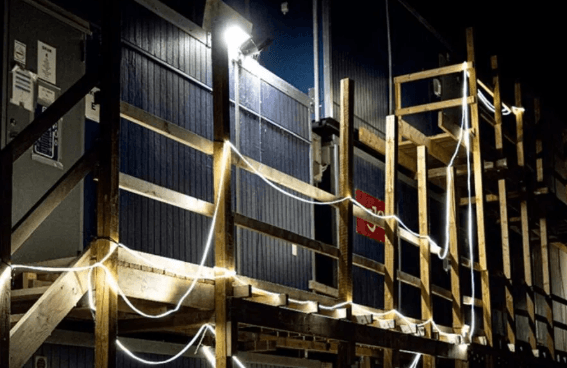
Lighting has become a critical part of modern infrastructure design, especially in commercial and industrial environments where energy efficiency, durability, and installation flexibility directly affect operational performance. From retail stores and hotels to warehouses and office buildings, lighting systems are no longer selected only for brightness. Engineers, architects, and facility planners now focus equally on maintenance efficiency, adaptability, safety standards, and long-term reliability.
One solution increasingly adopted across multiple industries is Commercial LED strip lighting because of its ability to provide uniform illumination while supporting modern architectural and engineering requirements. Unlike traditional rigid lighting systems, LED strip technology offers flexibility in installation and application, making it suitable for both functional and decorative environments.
As construction standards continue to evolve, lighting manufacturers are also improving strip light technology to support more demanding use cases. Features such as free-cutting capability, waterproof protection, and high-density chip configurations are now widely used in engineering projects where precision and durability are essential.
Flexible Design for Complex Installations
Modern commercial projects often involve irregular architectural layouts, curved surfaces, compact installation spaces, and customized lighting requirements. Conventional fixtures can be difficult to adapt in these situations, which increases installation time and material waste.
Free-cutting 12V and 24V COB LED strips solve many of these challenges by allowing installers to cut the strip at nearly any point without affecting overall performance. This flexibility simplifies integration into cabinetry, ceiling profiles, signage systems, retail shelving, and display units.
COB (Chip-on-Board) technology also improves lighting consistency by creating a continuous line of illumination without visible light dots. This is especially useful in projects where visual comfort and clean aesthetics are important, such as hospitality interiors, luxury retail spaces, and reception areas.
From an engineering perspective, free-cutting functionality reduces planning limitations during installation. Contractors can make precise adjustments on-site instead of redesigning layouts to fit fixed lighting lengths. This not only improves installation efficiency but also minimizes unnecessary material consumption.
In renovation projects, where dimensions may not always match original blueprints, adaptable LED strips provide a practical advantage. Maintenance teams can replace or modify sections without dismantling larger lighting systems, helping reduce downtime and labor costs.
Waterproof Protection for Demanding Environments
Environmental exposure is one of the biggest concerns in commercial and industrial lighting applications. Moisture, dust, cleaning chemicals, and outdoor weather conditions can significantly affect lighting lifespan if the correct protection standards are not used.
Waterproof 5050 LED strips with IP65 and IP68 ratings are commonly selected for these demanding environments because they offer reliable protection against water and particulate intrusion.
IP65-rated strips are suitable for indoor areas exposed to occasional moisture or dust, including kitchens, commercial washrooms, food preparation spaces, and covered outdoor structures. The protective coating helps maintain stable performance while reducing the risk of electrical damage.
For harsher conditions, IP68-rated LED strips provide a higher level of protection and are designed for environments with continuous water exposure. These strips are frequently used in landscape lighting, fountains, marine applications, swimming pool surroundings, and industrial facilities where equipment is regularly washed down.
The use of waterproof LED strip systems also contributes to safer electrical operation in humid or exposed environments. Proper sealing and insulation reduce the possibility of short circuits, corrosion, and premature component failure.
In infrastructure projects where maintenance access is difficult or expensive, durable waterproof lighting becomes particularly valuable. Reliable performance over long operational cycles helps reduce replacement frequency and overall maintenance costs.
Energy Efficiency and Operational Benefits
Energy consumption remains a major consideration for commercial facilities. Lighting systems often operate for extended hours, making efficiency an important factor in operational budgeting.
Modern LED strip solutions consume significantly less power compared to conventional fluorescent or halogen systems while still delivering strong illumination performance. COB LED strips, in particular, provide high luminous efficiency with consistent brightness distribution.
Reduced power consumption leads to lower electricity costs, especially in large commercial buildings such as shopping centers, office complexes, and warehouses where lighting systems operate continuously.
Additionally, LEDs generate less heat compared to traditional lighting technologies. Lower heat output contributes to better thermal management within indoor spaces and can reduce cooling demands in climate-controlled environments.
Long operational lifespan is another important advantage. High-quality LED strips are designed for thousands of working hours, helping facilities reduce maintenance interruptions and replacement expenses over time.
Supporting Modern Architectural Lighting
Architectural lighting now plays an important role in how commercial environments are experienced by customers, employees, and visitors. Lighting is used not only for visibility but also for spatial definition, ambiance, and wayfinding.
Linear LED strip systems allow architects to integrate lighting into ceilings, walls, staircases, shelves, and structural details with minimal visual disruption. Because the strips are compact and flexible, they can remain hidden while still delivering effective illumination.
This approach is especially useful in hospitality, retail, and entertainment environments where lighting design contributes directly to user experience.
For example, indirect lighting using COB strips can create soft, continuous illumination in hotel corridors or restaurant interiors without glare. In retail applications, LED strips are frequently used to highlight products, improve shelf visibility, and enhance display presentation.
Industrial facilities also benefit from adaptable strip lighting systems. Task lighting in production areas, equipment illumination, and safety marking applications often require compact and durable lighting solutions that can be installed in confined spaces.
Importance of Manufacturing Quality
The performance of LED strip systems depends heavily on production quality, thermal management, material selection, and electrical stability. As demand increases across commercial sectors, choosing a reliable LED tape light manufacturer becomes increasingly important for ensuring long-term project performance.
Consistency in chip quality, PCB design, waterproof sealing, and voltage regulation directly affects brightness stability and product lifespan. Poor-quality strips may experience uneven illumination, overheating, or premature degradation, particularly in high-use commercial settings.
Manufacturers focused on engineering standards typically conduct thermal testing, waterproof verification, and electrical safety inspections to ensure reliable operation across different installation conditions.
For contractors and system integrators, dependable manufacturing quality simplifies project execution and reduces the risk of maintenance-related issues after installation.
See also: Business Information Group Background Check: Guide
Future Outlook for LED Strip Technology
As smart building systems continue to expand, LED strip lighting is expected to become even more integrated into automated infrastructure. Dimming controls, sensor integration, and programmable lighting environments are already becoming common in commercial projects.
Future advancements will likely focus on improved energy efficiency, smarter control systems, and enhanced durability for industrial applications. Flexible installation features such as free-cutting COB designs and advanced waterproof protection will continue supporting a wider range of engineering applications.
The evolution of LED strip technology reflects the broader movement toward adaptable, energy-conscious, and maintenance-efficient infrastructure solutions. Whether used in retail environments, industrial facilities, hospitality projects, or architectural installations, modern LED strip systems provide a practical balance between performance, reliability, and design flexibility.
