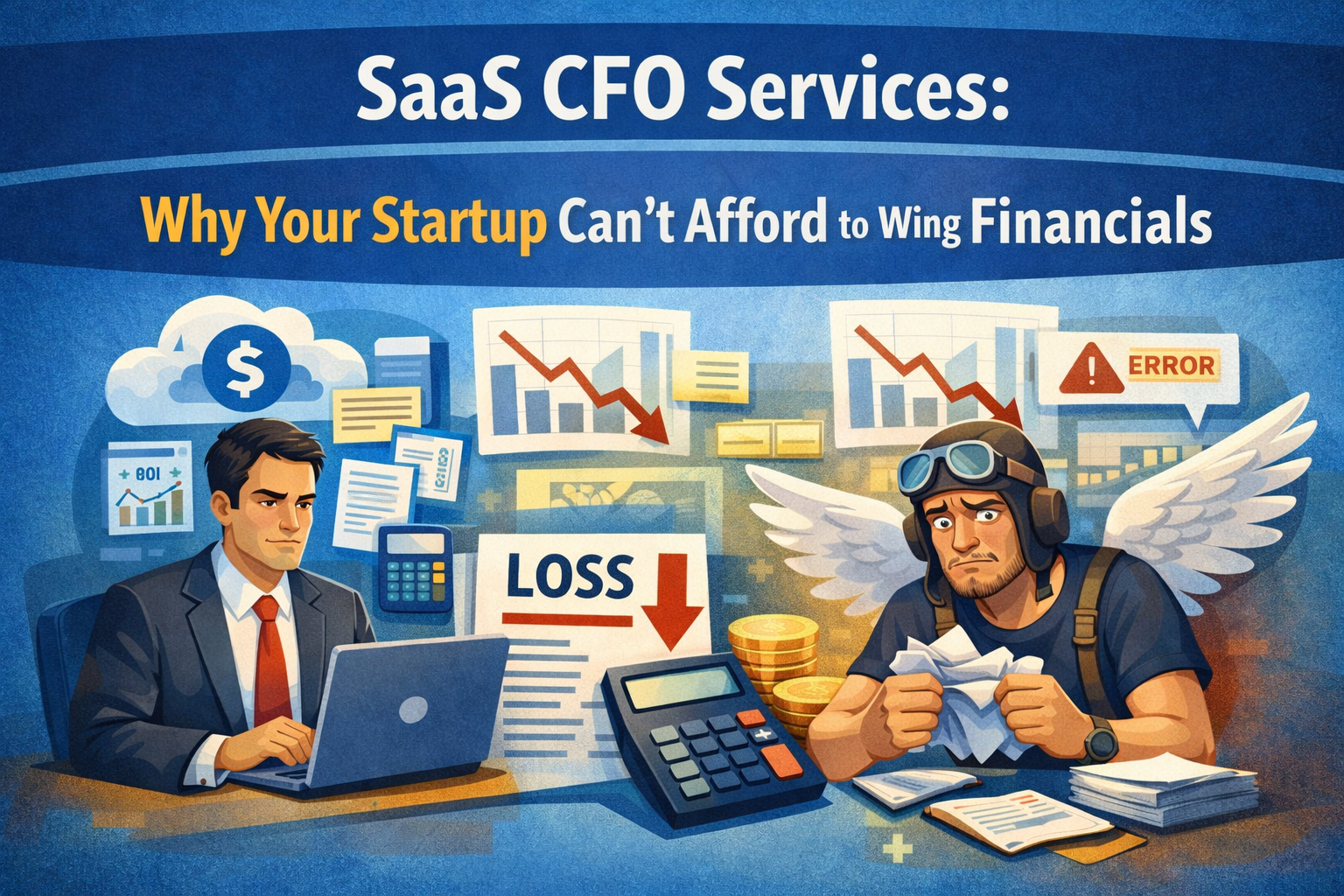
Building a SaaS startup is undeniably exciting — recurring revenue models, scalable solutions, and the potential for rapid, exponential growth make it an attractive space. However, there’s a difficult reality many founders don’t fully grasp until it’s too late: even the most innovative product and growing customer base won’t matter if your financial structure is weak or unstable. Mistakes like incorrect revenue recognition, overlooked compliance risks, or failing to properly interpret churn data are not minor issues — they are critical threats that have quietly taken down even well-funded startups that appeared strong on the surface.
This is exactly where specialized SaaS CFO services become essential. This isn’t about basic bookkeeping or hiring a general accountant juggling multiple industries. Instead, it’s about bringing in financial leadership specifically designed for the subscription-driven, metrics-focused, and investor-heavy SaaS ecosystem.
What Exactly Are SaaS CFO Services?
SaaS CFO services go far beyond standard financial oversight or routine accounting. A fractional or outsourced CFO with SaaS expertise understands the complexities of subscription-based models, including deferred revenue, ARR, MRR, CAC, LTV, and churn — not just as technical terms, but as vital indicators that directly impact the survival and scalability of your business.
For startups in early or growth stages, hiring a full-time CFO with deep SaaS knowledge can be financially out of reach. That’s where the fractional approach becomes valuable — it allows companies to access high-level financial expertise at a fraction of the cost, exactly when it’s most needed, whether during fundraising, scaling operations, or preparing for an exit.
5 Critical Signs Your SaaS Startup Needs a Specialized CFO Now
1. Your Revenue Recognition Is a Guessing Game
One of the most common and dangerous mistakes in SaaS accounting is confusing cash received with revenue earned. In reality, standards like ASC 606 and IFRS 15 require revenue to be recognized over the service period. If annual subscriptions are recorded as immediate income, you’re not just making a technical error — you’re potentially misrepresenting your financial position, which can damage credibility with investors and even lead to regulatory consequences.
2. Investor Reporting Feels Like Chaos
As startups move toward funding rounds, expectations around financial clarity increase significantly. Without well-structured, GAAP-compliant reports and a strong understanding of your key metrics, you risk appearing unprepared. Investors will closely examine your numbers, and without proper financial leadership, presenting them confidently becomes extremely difficult.
3. Billing Errors Are Slipping Through the Cracks
Manual billing systems often lead to unnoticed revenue loss due to inconsistencies, failed transactions, or incorrect pricing adjustments. Over time, these issues compound, affecting both revenue and customer satisfaction. Poor billing experiences can quickly damage trust and lead to higher churn rates, making this a problem that impacts both finance and retention.
4. You Can’t Confidently Explain Your Unit Economics
If explaining your CAC, LTV, or payback period feels unclear or uncomfortable, it’s a strong signal that your financial insights need strengthening. Investors and stakeholders expect founders to clearly understand these metrics and how they influence growth. A SaaS CFO helps translate raw data into meaningful, actionable insights.
5. Compliance Is an Afterthought
Operating in SaaS often involves handling sensitive customer data, which brings strict regulatory requirements like GDPR or CCPA. Ignoring compliance until it becomes urgent can lead to serious consequences, including penalties or lost opportunities. A specialized CFO ensures compliance systems are built early and can scale alongside your business.
See also: Unlock Long-Term Residency and Business Opportunities in the UAE
The Core Financial Metrics Every SaaS CFO Tracks Obsessively
Strong SaaS CFO services are rooted in a deep understanding of the metrics that truly matter for growth and sustainability. These include:
- Monthly Recurring Revenue (MRR) & ARR: Fundamental indicators of predictable revenue that heavily influence valuation
- Customer Acquisition Cost (CAC): A clear measure of how much it costs to gain each new customer
- Churn Rate (Customer & Revenue): Tracks both customer loss and the revenue impact of that loss
- Lifetime Value (LTV): Determines the long-term value each customer brings to the business
- Cash Flow & Burn Rate: Essential for understanding runway and long-term financial stability
Even minor inaccuracies in these metrics can significantly distort your financial picture and lead to poor decision-making.
How SaaS CFO Services Drive Growth Strategy — Not Just Financial Reporting
The best SaaS CFOs go beyond managing numbers — they actively contribute to strategic growth decisions.
Fundraising Preparation
A SaaS CFO ensures your business is fully prepared before approaching investors. This includes clean financials, detailed projections, and well-structured models that demonstrate scalability and stability.
Expansion Strategy
Growth decisions, such as entering new markets or introducing new pricing tiers, require careful financial analysis. A CFO evaluates these opportunities using data-driven modeling rather than assumptions.
Risk Management
Many startups fail due to poor cash flow management rather than lack of demand. A proactive CFO identifies potential risks early, runs scenario planning, and builds systems to avoid financial instability.
Building the Right SaaS Accounting Tech Stack
While expertise is critical, the right technology enhances accuracy and efficiency. A strong SaaS accounting system should support:
- Automated revenue recognition aligned with accounting standards
- Multi-currency billing for global operations
- Real-time dashboards for tracking key metrics
- Seamless CRM and ERP integrations
- Automated reconciliation processes
- Secure access controls for compliance and data protection
When implemented correctly, these tools reduce manual workload and allow finance teams to focus on strategic planning rather than routine tasks.
What to Look for in a SaaS CFO Partner
Not every CFO or accounting provider is equipped to handle SaaS-specific challenges. When choosing a partner, consider:
- Strong expertise in subscription-based accounting
- Ability to build flexible, scenario-driven financial models
- Experience with investor-ready financial reporting
- Proactive approach to compliance and risk management
- Familiarity with modern SaaS financial tools and systems
The right CFO partner doesn’t just manage finances — they become a key contributor to your company’s growth journey.
The Bottom Line: Financial Precision Is a Competitive Advantage
The SaaS companies that succeed long-term aren’t just those with great products — they’re the ones with clear financial visibility, disciplined metric tracking, and well-informed decision-making. Financial accuracy isn’t just about avoiding errors; it becomes a strategic advantage in a competitive and investor-driven market.
Whether you’re at an early stage building traction, preparing for funding, or scaling rapidly, having the right financial leadership can significantly improve your chances of success. A specialized SaaS CFO helps you grow with confidence while avoiding costly financial pitfalls.
If you’re ready to strengthen your financial foundation and align it with your growth ambitions, exploring SaaS CFO services could be one of the smartest decisions you make for your business.
Ready to take control of your SaaS financials? Take charge of your SaaS finances today. Book a complimentary 30-minute strategy session with K-38 Consulting at k38consulting.com and receive tailored financial insights designed specifically for SaaS businesses.
