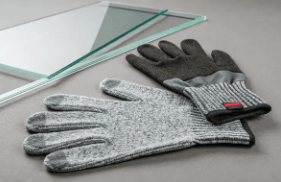
Selecting appropriate gloves for glass handling requires understanding both the specific glass material being handled and the nature of the handling task. Glass comes in many forms — flat sheets, tempered panels, shaped laboratory glassware, and fragile specialty glass — each presenting its own hazard profile and requiring specific glove properties.
Matching Glove Properties to Glass Handling Tasks
Flat Glass and Window Installation
Installing large flat glass panels in windows and curtain walls exposes workers to extremely sharp edges over long perimeters. Gloves for this application must offer very high cut resistance across the entire hand including the wrist area, with extended cuffs to protect the lower forearm.
Grip on smooth glass is also critical. Wet or freshly cleaned glass can be dangerously slippery. Coatings that maintain grip on smooth surfaces — even when slightly wet — are essential for safe flat glass handling in construction and glazing applications.
Laboratory Glass Handling Requirements
Laboratory glassware handling presents different challenges. Broken beakers, flasks, and tubing in laboratory environments may contain hazardous chemicals, adding chemical resistance requirements to the cut protection specification.
Dexterity requirements in the laboratory are high — workers often manipulate small, intricate glass apparatus requiring fine motor precision. This creates tension with the need for protection, pushing toward thinner gloves with high cut ratings rather than thick, stiff alternatives.
Glass Manufacturing and Processing Environments
In glass manufacturing environments, workers may handle glass that is still hot from the forming process or that has sharp formed edges from cutting. This environment requires gloves that combine cut resistance with thermal protection and may require extended cuff lengths to protect from radiated heat.
Glass processing operations such as cutting, drilling, and polishing create glass dust and chips that settle on all surfaces. Workers in these environments benefit from gloves that can be easily cleaned or that are replaced frequently to prevent glass particles from damaging skin through the glove material.
See also: Spa Equipment Manufacturer: Elevating Standards in the Wellness Industry
Frequently Asked Questions
Q: Should gloves for glass handling be coated or uncoated?
A: Coated gloves are generally preferred for glass handling as the coating improves grip on smooth surfaces and adds an additional layer of protection. The specific coating type should be matched to whether grip is needed in dry, wet, or oily conditions.
Q: Can the same gloves be used for glass and metal handling?
A: High cut-level gloves are generally suitable for both glass and metal handling if the cut resistance rating is appropriate for both applications. However, the specific coating and length requirements may differ.
Q: How should gloves for glass handling be stored?
A: Store away from direct sunlight and heat. Do not store with sharp objects that could damage the glove material, even when stored. Inspect before each use for any cuts or penetrations in the glove that could create weak points.
Conclusion
Gloves for glass handling must be carefully matched to the specific application, glass type, and task requirements. By investing time in proper selection and ensuring gloves for glass handling workers receive training on how to inspect and use their gloves, organizations can effectively control one of the most severe cut-hazard environments in any workplace.
